



The legislation is crystal clear and has imposed new rules since 27 September. In essence, the lawmaker’s mandate now also requires operators to refrain from those unfair practices through which many, until now, have pretended—or led people to believe—they were sustainable.
“I want a sustainable hotel, and above all I don’t want my holiday to add to my eco-anxiety”—this is perhaps a fixed thought in the minds of many tourists as they set about choosing a property, favouring one booking platform over another, or weighing up a type of excursion with a high environmental impact.
To get around this kind of situation, over the years—after countless efforts to give their business an “ecological” façade—tourism businesses have often ended up wanting to seem green rather than truly being green.
In short, we have gone from wanting to spread a sustainable culture to pretending to spread it. Hence greenwashing, which is now in the crosshairs of a very specific national law designed to counter it. The legislative act transposes an older European directive which, since last 27 September, involves—as a matter of supranational law—any activity whatsoever, but here we focus on how the law affects tourism operators.
Legislative Decree no. 30 of 20 February 2026, which came into force roughly a month after its promulgation, had also given operators at least six months to find the time and the means to comply.
Which directive has Italy transposed from Brussels? Directive 2024/825 of the European Parliament and of the Council of 28 February 2024, which amends directives 2005/29/EC and 2011/83/EU with regard to “empowering consumers for the green transition through better protection against unfair practices and better information,” as published in the Official Gazette.
The intent is to protect the consumer, not the entrepreneur. The entrepreneur, instead, must comply by wiping the slate clean of all those questionable or unfair claims that they—or someone on their behalf—had chosen to favour in spreading corporate communications regarding business sustainability toward the consumer.
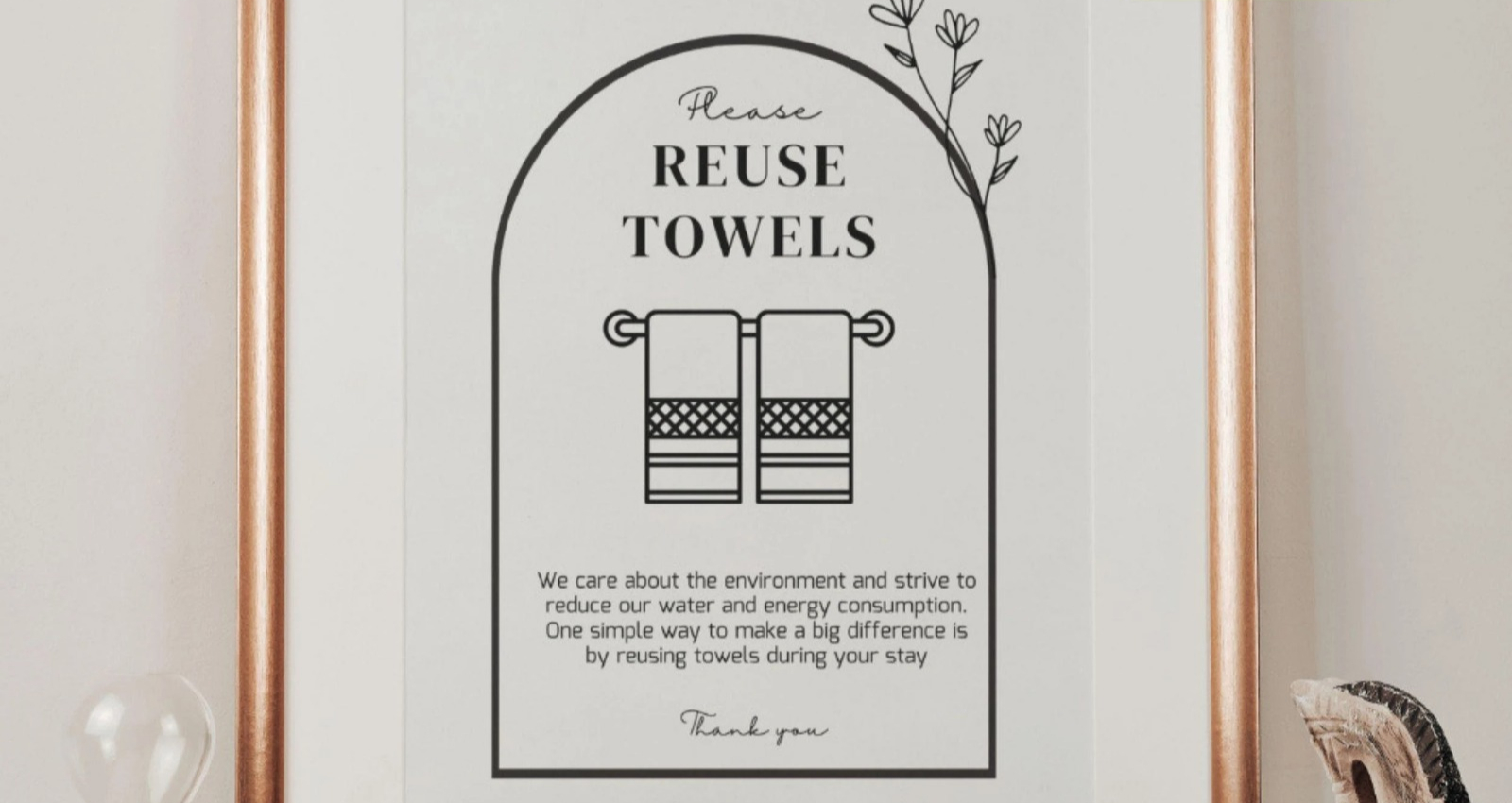
How is greenwashing understood in the case of tourism operators? One example above all: “Reuse your towel to save the environment”—the sign alone cannot justify branding a property as “eco-friendly” if, at the same time, the property uses an enormous amount of fossil energy to heat a swimming pool while having the sea right in front of it. Also under scrutiny is the communication on one’s own website, social media, brochures, labels, and even packaging, extending as far as ESG considerations.
So the environmental practices of hotels, too, must be communicated transparently and not deceptively; it is therefore necessary to banish claims unfit to foster a genuine environmental culture.
And it is necessary to analyse all existing communications, or at least those produced up to last September. Sustainability labels must now be backed by a compliant certification system. Moreover, relying on an external company for communications does not exempt the operator from responsibility for proper environmental communication toward the consumer.
Operators are therefore required to ensure that their environmental and social communications conform to the regulations and that every claim chosen is thoroughly proven and verifiable. The lawmaker’s latest provisions also apply on the web and in e-commerce, obliging the entrepreneur to carry out a preventive check of marketing campaigns.
Furthermore, companies may use only sustainability labels recognised by the regulations. There is also a focus on “climate-neutrality declarations based on emissions offsetting and any future environmental commitments,” which must be accompanied by adequate implementation plans, as noted in a recent article in Il Sole 24 Ore, here.
Worth knowing. Misleading environmental claims fall within the unfair commercial practices governed by the Consumer Code. The competent authority is the AGCM (the Italian Competition Authority) and, under the Consumer Code, where the information or documentation provided is untruthful, the Authority imposes an administrative fine ranging from €4,000 to €40,000 and, in the most serious cases, up to €5 million.
Operators must also check that the sustainability marks they use comply with the regulations, and set up internal procedures for the approval and verification of “claims” (that is, advertising slogans or premises) before they are released.
But, on a positive note, ecological practices that may have been ignored or undervalued by the operator should also be reassessed—because sometimes they do exist. It is worth seeking out, if this hasn’t been done, what is naturally sustainable within one’s own business, rather than inventing it. An example? Sourcing the pantry for the hotel’s restaurant, which could easily be done locally (“kilometre zero”), reducing the environmental impact of transport.