


From historic villages to artisan workshops, the tour operator featured at BITESP 2025 designs itineraries for small groups that combine personalization, sustainability, and commercial accessibility.
In today’s inbound tourism market, authenticity is no longer just a compelling narrative. To become relevant for travel agencies, travel consultants, and international buyers, it must be translated into clear itineraries, coordinated services, and offerings that can be practically integrated into travel programs. It is precisely at this transition—from telling the story of a destination to building a marketable product—that Stile Italiano Tours, a tour operator participating in the 2025 edition of BITESP, positions itself.
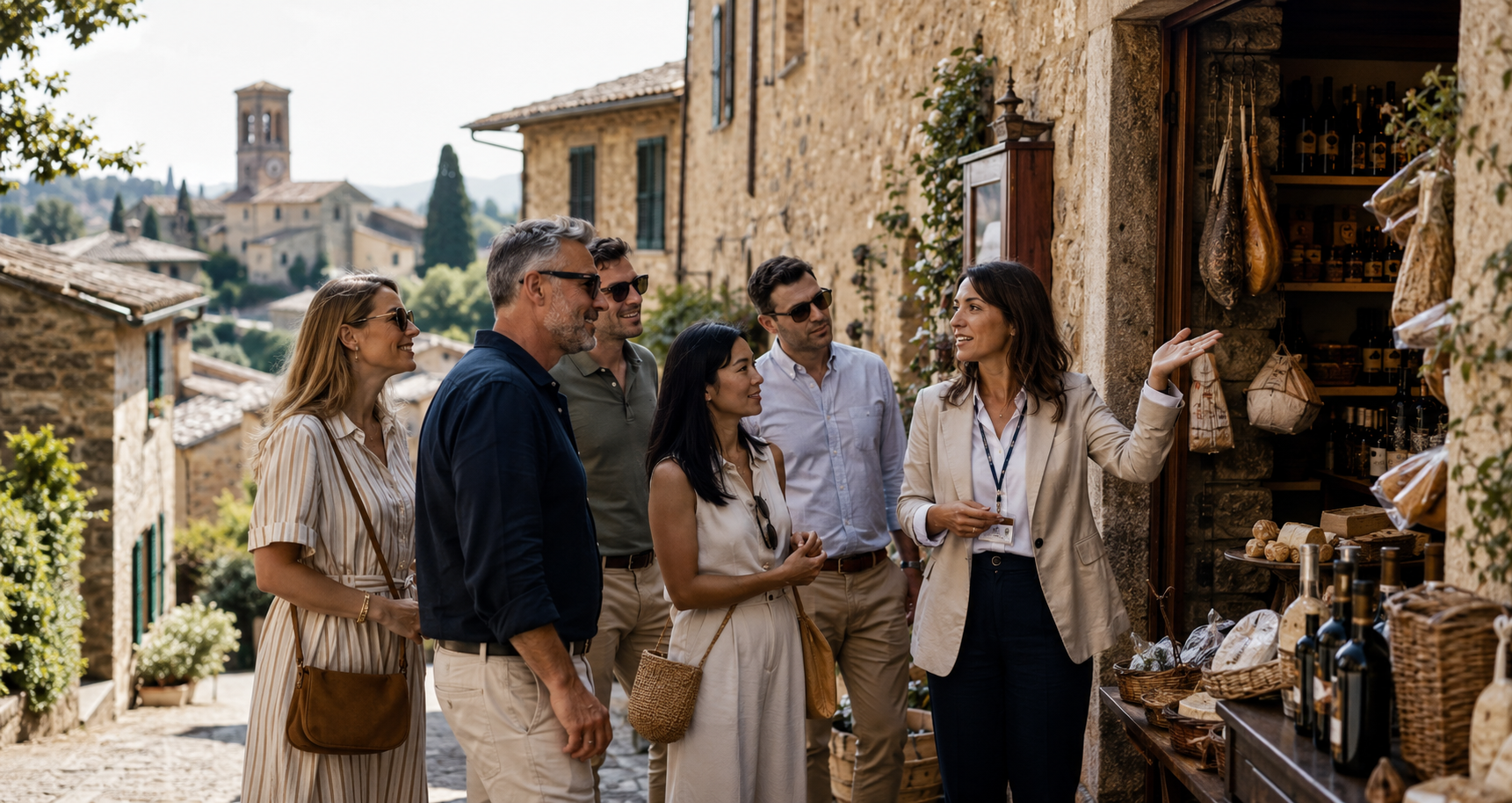
The company was founded with the goal of presenting a less predictable Italy, one defined not only by its major art cities but also by villages, rural landscapes, artisan workshops, family-run businesses, and local communities. The team describes itself as being made up of personal travel designers and develops private trips and journeys for small groups, combining comfort, in-depth local knowledge, and direct contact with the people who live in these destinations.
From a B2B perspective, the value of its offering lies in its ability to integrate elements that are often marketed separately. Boutique accommodations, local guides, transfers, food and wine experiences, cultural visits, and activities with artisans or producers become components of a single, cohesive itinerary. This coordinated approach reduces the fragmentation of the tourism offering and makes it easier for intermediaries to present clients with a journey that is consistent in style, pace, and market positioning.
The catalog clearly reflects this approach. Alongside itineraries dedicated to Lake Como, Umbria, and Southern Italy, there are proposals such as a slow travel experience through Tuscany and Umbria, routes across Puglia and Matera, and active experiences around Lake Iseo. The itineraries, generally lasting between four and nine days, support the creation of complete travel packages and allow the operator to serve both individual travelers and small groups interested in culture, gastronomy, nature, and meaningful local connections.
The company’s commitment to responsible tourism does not appear to be an added feature but rather a core design principle. Stile Italiano Tours states that it collaborates with local guides, artisans, and family-run businesses, prioritizes accommodations that reflect the character of each destination, supports local restaurants and producers, and uses trains or regional transportation providers whenever possible. From a market perspective, this approach can enhance the perceived value of the travel experience, provided that sustainability and authenticity are supported by verifiable standards and operational consistency.
Its most natural target audience consists of culturally curious international travelers with medium-to-high spending power and a preference for personalized services. These travelers are not necessarily seeking ostentatious luxury; instead, they value time, the quality of personal encounters, meticulous organization, and access to places that are difficult to discover independently. For foreign travel agencies and tour operators, the availability of ongoing assistance and strong local expertise also represents an important reassurance during the sales process.
Participation in BITESP 2025 therefore carries a clear commercial purpose: positioning a well-structured inbound tourism product within an event dedicated to connecting suppliers with buyers interested in experiential travel in Italy. Workshops and B2B meetings can help an operator of this size build distribution partnerships, better understand the needs of different markets, and adapt departures, services, languages, and commercial conditions accordingly.
For the travel trade, the broader lesson is clear: secondary destinations can enter international catalogs only when someone takes responsibility for selecting, coordinating, and guaranteeing the services involved. The role of the tour operator therefore remains central—not merely as an intermediary, but as a product designer capable of transforming a diverse range of local resources into a coherent, reliable, and market-ready offering.
The future challenge will be maintaining the balance between personalization and scalability. Growing without becoming overly standardized requires a reliable supplier network, clear product sheets, net or commissionable pricing, up-to-date availability, and shared operating procedures. Stile Italiano Tours, however, demonstrates an interesting direction: authentic Italy becomes competitive when it is no longer just an evocative idea, but is organized into an experience that can be purchased, distributed, and clearly recognized by the international market.