





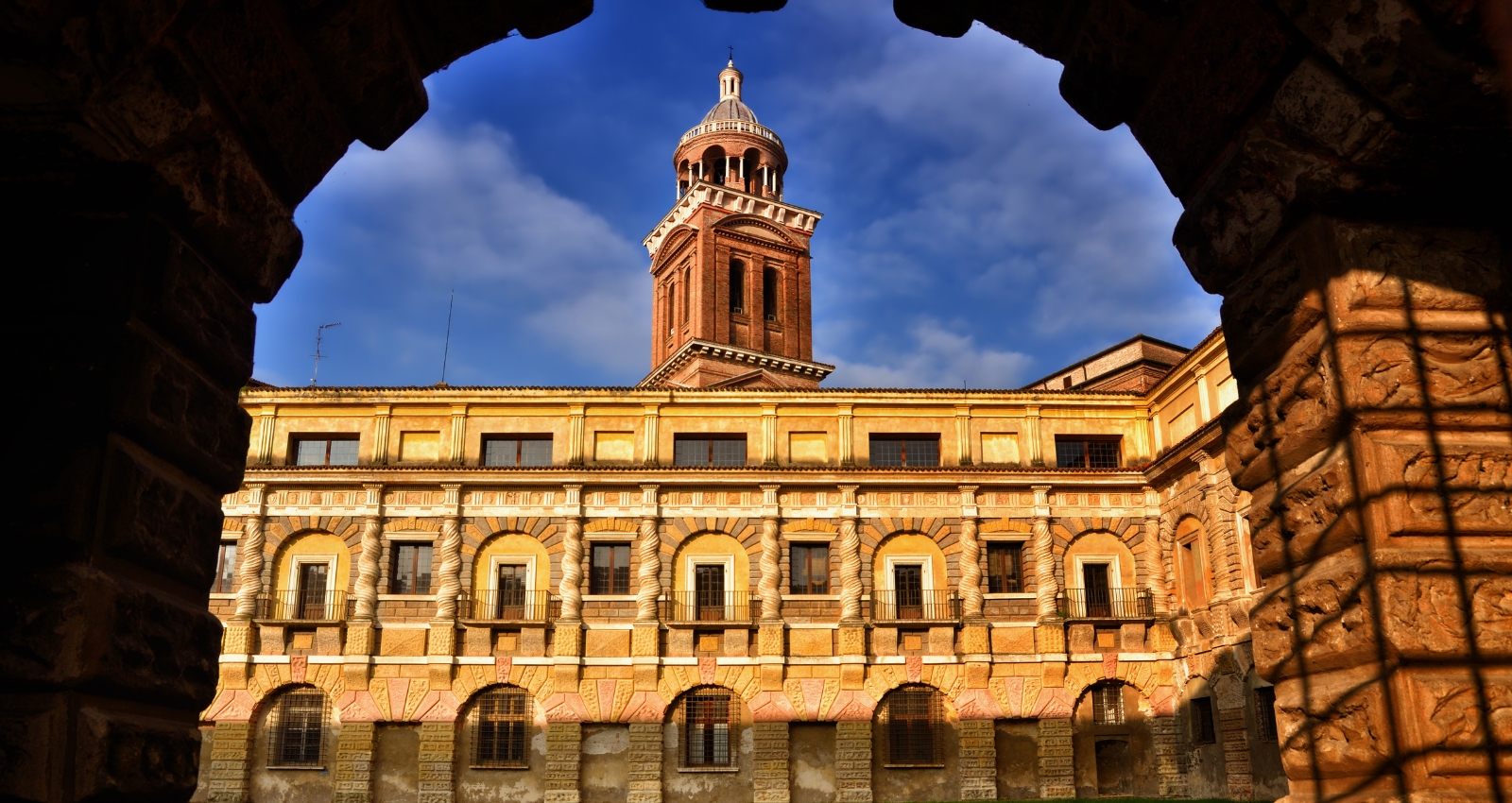
The Ecosistema Urbano 2026 report rewards the Lombard city, placing it no fewer than seven times in the top ten of the environmental indicators. A result that further enhances its standing among the destinations favoured by tour operators. Let’s rediscover it — between UNESCO heritage, cycle tourism and river navigation, with a few curious nods to the Supreme Poet
The enchanting Mantua has claimed first place in the national ranking of Ecosistema Urbano 2026, the annual report by Legambiente and Ambiente Italia, produced in collaboration with Il Sole 24 Ore. According to the survey’s findings, the Lombard capital reaches an environmental performance index of 81.29 percent, ahead of Trento (76.53%) and Bolzano (75.47%) among the 106 Italian provincial capitals examined.
In the report, Mantua appears no fewer than seven times among the top ten Italian cities, often taking the leading positions in individual environmental indicators. It is second for the extent of its limited-traffic zones, and third for cycle-friendliness and the number of trees on public land. A distinguished result that confirms the city’s environmental performance and positions it even better for the tourism market that attracts those who care about the environment — a tourism market that, as is well known, finds in Mantua a versatile destination, capable of bringing together prestigious historical heritage, cycle-and-pedestrian routes and natural settings.
Those who discover Mantua for the first time describe it as a compact, elegant city, inhabited by discreet people, to be enjoyed at a slow pace. A meeting point that blends Venetian, Lombard and even Emilian flavours, like a crossroads of regional influences that almost leaves at a loss anyone trying to define it in a single word. Mantua, in short, is a city that radiates a strong sense of order and tranquillity, buoyed by a comfortable prosperity without ever flaunting its wealth.
From the Gonzaga Renaissance to the lakes of the Mincio
The city offers tour operators the chance to organise cultural itineraries concentrated in the historic centre, most of it walkable on foot. Among the main attractions is that masterpiece of the Renaissance, the Ducal Palace, with the Camera degli Sposi frescoed by Andrea Mantegna; the Basilica of Sant’Andrea designed by Leon Battista Alberti; and the stupendous Palazzo Te, which makes heads spin over its frescoed ceilings in an extraordinary play of perspectives in Giulio Romano’s Hall of the Giants.
Since 2008, the city has shared with Sabbioneta the recognition of UNESCO World Heritage status. The two sites are able to satisfy the visitor by linking up in a single, multifaceted itinerary that takes in Renaissance architecture and urban planning.
Another component of the offer concerns the three lakes that surround Mantua, fed by the Mincio. And there is poetry: “My parents both were Lombards, and Mantuans by birth the two of them.” Yes — because Dante, speaking of Virgil, also recounts the legendary origin of the name of Mantua. And one always feels almost like the Supreme Poet of the Divine Comedy during the autumn boat excursions, which let us observe the city’s monument-rich skyline from the water and reach the natural areas of the Valli del Mincio. Those who arrive in summer on the Lago Superiore, by contrast, discover the zen beauty (Italian-style) of the blossoming lotus flowers.
For cycle tourism, one of the main itineraries is the Mantua–Peschiera del Garda cycle route, which connects the city to the lake crossing the territory of the Mincio Park. A route that makes it possible to combine cultural stays with outdoor activities, including within programmes dedicated to eastern Lombardy and Lake Garda.
The offer is then rounded out by local gastronomy — from pumpkin tortelli to risotto alla pilota, through to the sbrisolona cake and Mantuan mostarda. And there are plenty of opportunities for tastings and visits to local farms. In the Mantuan countryside we find estates such as Bugno Martino, which produces organic Lambrusco wine at San Benedetto Po, and Solimago, an organic estate nestled in a Renaissance courtyard at Solferino — all offering experiences among vineyards, local produce and tastings.
Andrea G. Cammarata