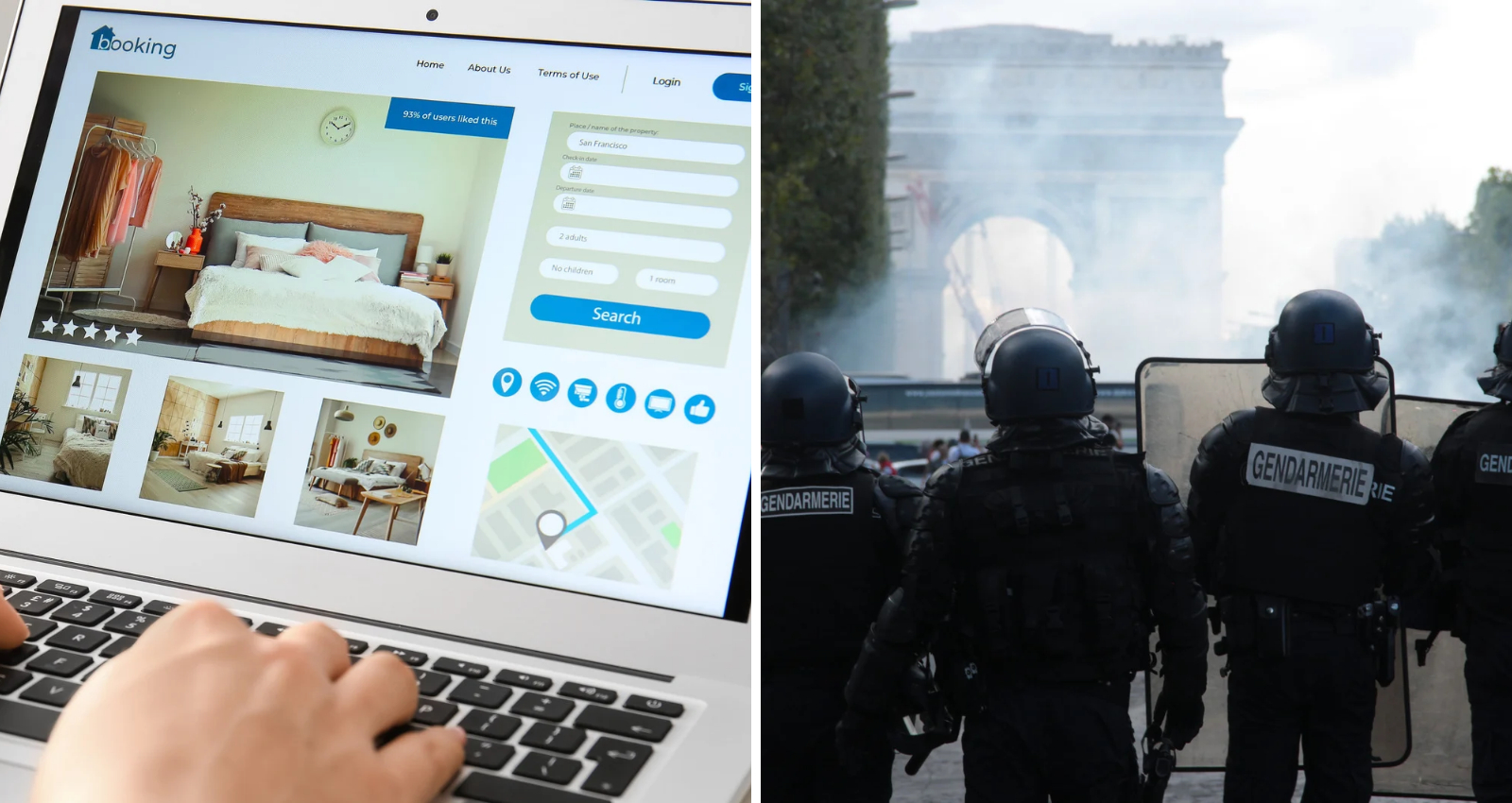
Some international media are recounting the social tensions in France to the point of advising against travel. A narrative that, while putting travellers’ safety first, nonetheless hits the tourism economy. But is Italy still safe?
“Riots in France. Should you maybe cancel your flight?”—so runs the headline of the well-known American daily USA Today, in an article dated 19 October. And it tackles the question head-on: how safe is it still to visit France today, with the unrest in Paris and Marseille. What are the consequences of this kind of narrative, and how exposed are the tourism operators working on Italy to information of this sort—accurate though it may be? And above all, how seriously can a period of unrest affect the business performance of tour operators, operators, and the supporting economy? According to data from the French national statistics institute INSEE, in December 2018, during the “yellow vests” demonstrations, overnight stays in Parisian hotels fell by 5.3% compared with the previous year. But the repercussions of the protests against the pension reform in 2023 were even more substantial: according to a survey by the Groupement des Hôtelleries et Restaurations, Parisian hotels recorded as much as 15% in cancelled stays. Italy too has made the international news coverage of the European protests of recent days, yet we are not aware that any outlet has invited travellers to consider cancelling their flight to the Belpaese. It is nonetheless worth reflecting on, because the tourism operator, through their representative bodies, can exert leverage on the internal decisions of those who must find answers to the protesters’ demands. In Milan, five days of hotel activity are worth around €23 million in revenue; assuming a 10% cancellation rate, the protests would mean losses of over €2.27 million.
Andrea G. Cammarata