





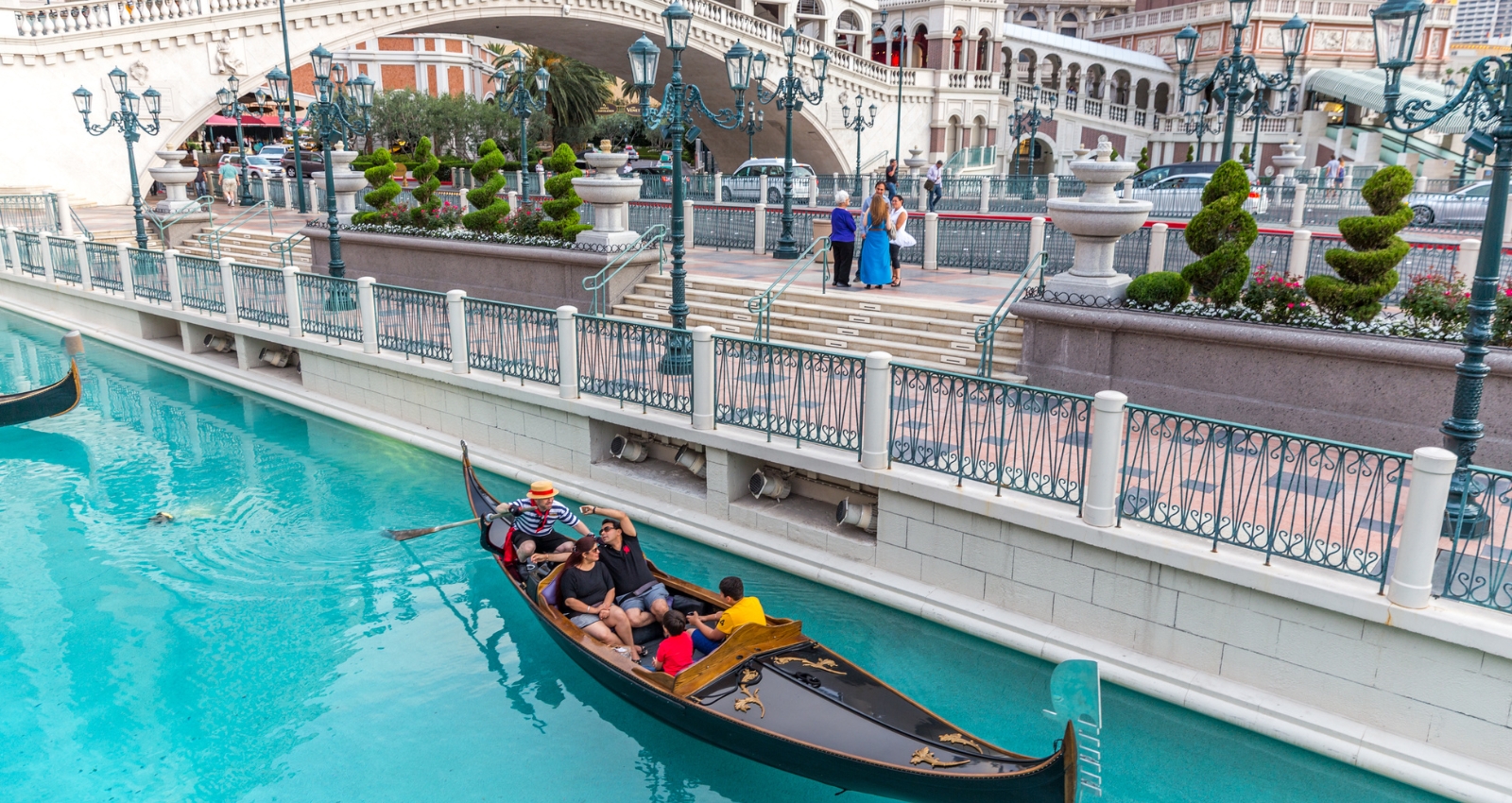
In the United States, a district inspired by Venice will rise—with navigable canals, squares, hotels, and Italian architecture. And it isn’t the first time: in Texas there is already a little Croatia. A homage to the enduring charm of the Serenissima that ought to remind us just how much our national tourism heritage is worth
It takes two billion dollars to try to recreate a corner of Italy in Texas. An astronomical sum—especially when you consider that here at home that same beauty already exists, there for the eyes of anyone who feels like crossing a square or looking out over a canal, embracing the Dolce Vita, that unique way of life: elegant, enterprising, lively, sociable, and above all human. And yet, while in Italy we wonder how to make the most of our heritage, across the ocean someone has decided it’s worth investing a fortune to copy it.
It’s happening in Prosper, a wealthy suburb north of Dallas, where on 27 October the city council approved the zoning change needed to build The Marco, a gigantic real-estate complex inspired by Venice. The project, promoted by the Blackard Companies of entrepreneur Jeff Blackard, will occupy around 58 hectares—the equivalent of at least 81 regulation football pitches—plus a handsome artificial lagoon of over six hectares, canals navigable by electric boats, as well as squares, fountains, and hotels. The paradox: there is to be a poor copy of Venice where Venice is not—for all that it’s owed.
And the case gives pause for thought, taking us elsewhere. In Thailand, the authorities have introduced restrictions on the production and export of images of the Buddha, with communities having opposed their commercial and indiscriminate use. From the sacred to the profane, let us carry this religious sensibility over to the protection of artistic heritage which—as we observe—is reproduced like any counterfeit commercial brand and reduced to mere stage scenery. It’s worth asking a question. Should we claim exclusive rights over Venetian bell towers? Yes—when even beauty becomes a product for export, to be reproduced faithfully or fraudulently. It seems the right moment for those in high places to ask themselves how to protect the Belpaese’s originality, so that Venice—and who knows what other places—do not end up being confused with their imitations.
In ultra-conservative Texas, the architecture in question will take up the elements of the Veneto tradition, not ranches and cowboy hats. There is talk of ochre and terracotta façades, wrought-iron balconies, cobbled paving. The plan provides for up to 4,400 residential units, and long years to build it all and open to the public this artificial atmosphere of Italy outside Italy.
Blackard, for that matter, is no stranger to similar operations. In McKinney, also in Texas, Adriatica Village has already been built—a district of around 18 hectares inspired by Supetar, a fishing village in Croatia, once called San Pietro della Brazza, with an obvious Venetian legacy. Begun in 2005 and developed in phases, the complex reproduces a small Adriatic town.
According to the local tourism organisation Visit McKinney, Adriatica has become one of the most photographed sights in northern Texas. In short, we are talking about a piece of Croatia—or of the Italy that once was—reconstructed on the other side of the Atlantic and evocative enough to turn into an attraction.
It makes you smile—or perhaps smirk—to discover that Americans are trying to reproduce, through billion-dollar investments, what we already possess. From Chioggia to Agrigento, from the cities of art to the medieval villages, Italy guards a unique heritage of architecture and landscapes that, as we can see, become models to be imitated in miniature. Against imitations, though, we have an antibody: the property developers can build canals, bell towers, and colourful façades, but they cannot manufacture two thousand years of history and the sentiment of the Dolce Vita. You don’t reproduce such things with a mere zoning plan. And you don’t reproduce, with bricks, the cultural stratifications, the traditions, the cuisine, the relationship between a city and its inhabitants. And above all, you can’t buy that authenticity which is one of the fundamental reasons why millions of visitors choose Italy.
The Texan project shows just how much the imagery of our country continues to exert a commercial pull—so much so that it inspires real-estate investments worth billions of greenbacks with George Washington printed on them, but not Giuseppe Garibaldi. Ultimately, Italy does not need to invent new settings. What it needs, instead, is to preserve the existing ones, make them accessible, tell their stories, and build around them a tourism offering capable of respecting their identity.
It therefore falls to operators to remind international travellers that behind the allure of an Italian square there is not merely a stage set, but a pulsing community, the custodian of a layered culture born from the encounter of different peoples, traditions, and civilisations. And for governments, there is a pressing need to open a shared round table to discuss how to truly protect the originality of Italy’s places. The States must be credited with an extraordinary ability to turn an idea into an investment—even by copying. In the meantime, to visit Venice, the real one, all we need is the urge for a spritz—and, above all, there’ll be no need to wait years for it to be built.
Andrea G. Cammarata