





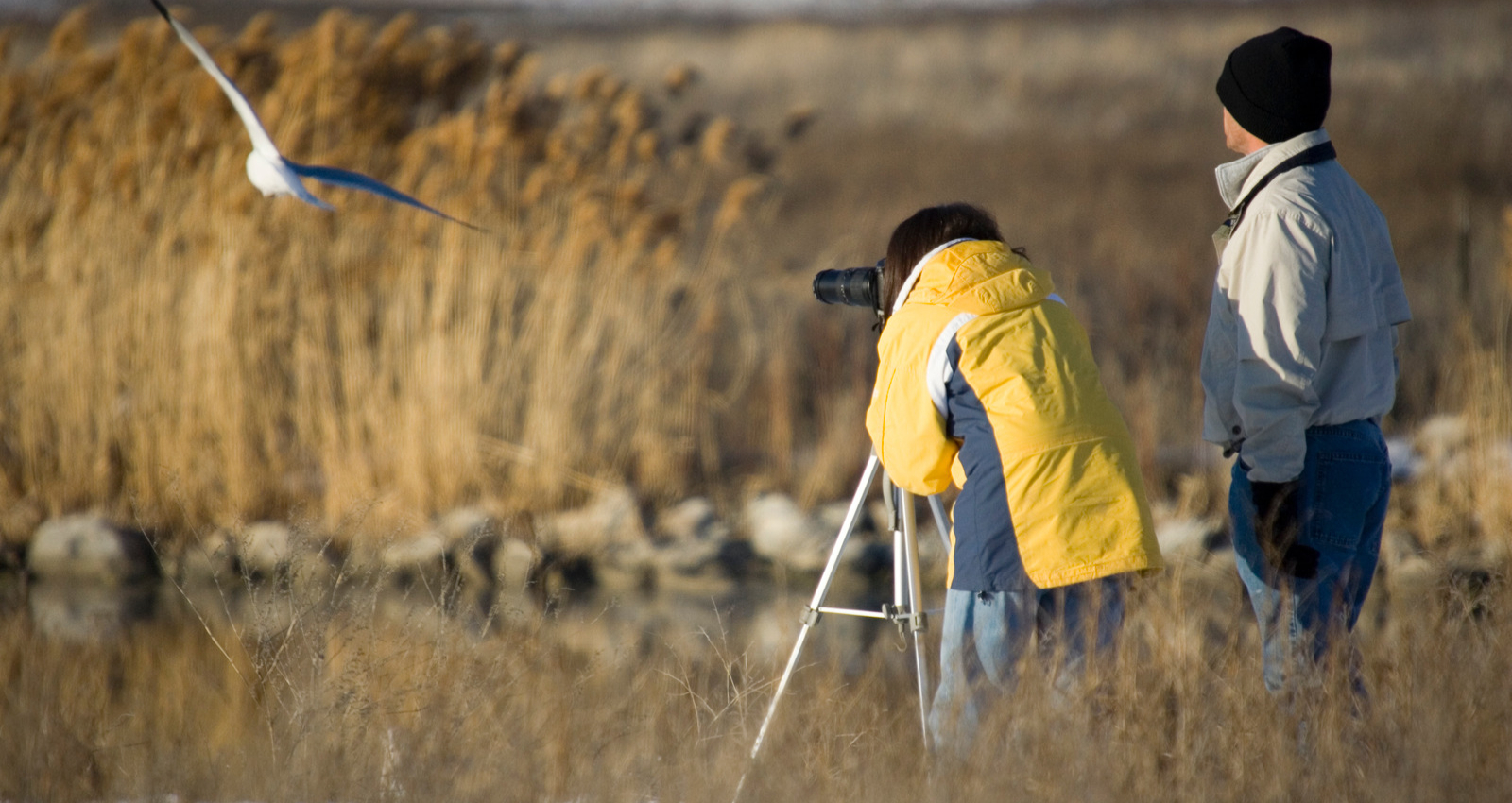
A little bird told us that… from technology you can move to experiential tourism. How AI is turning birdwatching into an opportunity for operators.
So, let’s start with why birds hold an important place in a professional magazine devoted to experiential tourism. And why AI belongs here in its own right. Because these two things, working in synergy, give rise to a perfect travel experience. If not for everyone, then at least for a category of tourist that in the United States involves millions of enthusiasts, with sector-related spending of around $14.5 billion on travel alone. And three Americans in ten go birdwatching, according to US government data from a 2022 survey.
From the Beatles’ iconic “Blackbird” to Saint Francis and Massimo Troisi—who talked to the birds—through to Charlie Parker, whom they called Bird because he had run over a chicken (a “yardbird”), which he then ate, and because he imitated birds so well on the sax in his jazz standard “Ornithology”: our feathered friends are part of our subconscious, carrying a deep archetypal value.
Flight, from the myth of Icarus onwards, evokes freedom and courage, but also fragility and impermanence. The Phoenix, which anticipates that very myth, is immortal and rises again from its ashes. Migration and travel, moreover, have always linked people and birds alike.
With a pair of binoculars, the birdwatcher looks for them, hidden among the branches, to recognise their song and their habitat. Simple gestures that, when connected to artificial intelligence, become the starting point of an experience. The notion of “eyebirding”—understood as the observation and identification of birds with the support of intelligent digital tools—thus positions itself as a connecting thread between technology and the discovery of a territory.
Apps such as Merlin Bird ID, BirdNET, and eBird make it possible to identify numerous species through photographs or sound recordings, as well as to consult naturalistic information and pinpoint areas of interest for birdwatching. These tools, conceived for the observation and study of biodiversity, consequently conceal a rich source for designing new forms of tourism.
Identifying a Species as Part of a Wider Experience
Take the example of an enthusiast who sets off along a trail, listening to the birds’ calls with their smartphone, identifies the species they encounter, continues along an itinerary that crosses woods and scenic viewpoints, and finally rounds off the experience with a guided tour of a village, a tasting of local products, or an overnight stay in a local property.
The support of artificial intelligence lies, then, in the ability to make these experiences accessible even to those with no naturalistic expertise, with the operator potentially increasing their visibility on AI platforms to draw a real advantage from it.
The tourist, expert or not, learns thanks to AI, obtains information relevant to ornithology and digital suggestions that can enhance their journey of discovery. Technology, therefore, as a companion tool—capable of stirring curiosity and attention towards the environment and placing itself indirectly (or directly) at the service of the tourism sector.
The potential for the Belpaese is boundless: from the cormorants of the cliffs to the river parks of the Po Delta, the rural and mountain areas, from the stork colonies of the Montefeltro to the peregrine falcon atop the Pirellone. AI-assisted birdwatching could contribute to building themed itineraries, family activities, excursions with environmental guides, and proposals aimed at travellers interested in slow tourism.
Not to be underestimated, for the operator, is the possibility of organising oneself through the app’s metadata, understanding the cycle of visits throughout the year, in keeping with the seasonality of the species and with environmental conditions.
AI-based nature observation, in short, complements the traditional tourism offering, encouraging stays even outside the high season and creating opportunities for collaboration among guides, accommodation providers, restaurateurs, and cultural operators. And here we think—by no means exhaustively—of the Birdwatching Guides of the Po Delta, or of Birdwatching in Lombardy.
A future, in conclusion, that offers us a glimpse of useful digital services to transform a simple observation into an organised and, potentially, marketable experience.
Andrea G. Cammarata