


A festival explained—one that speaks to us of relational tourism, and of how a traveller can choose to visit a place not necessarily for the beauty of its monuments, but for the values or principles that place has chosen to uphold.
Thinking about the travel experience through a cultural festival—asserting your own ideas and values, supporting a cause dear to you or to your loved ones. The example we’re discussing is Alzheimer Fest which, like other health festivals, answers the kind of questions that sometimes grow within us, in our conscience, and that lead a new idea of holiday to take the place of the classic one. In short, a holiday, or a weekend, that is less materialistic and more altruistic.
Alzheimer Fest presents itself as a travelling celebration that puts people at its centre, bringing them together through art, food, and conviviality, with many kinds of activities and experiences—where at the heart, of course, lies a serious illness, and the prevention of that illness, which affects at least 600,000 people in Italy, according to Ministry of Health figures.
Alzheimer Fest came to life in 2017 thanks to the non-profit association Alzheimer Fest APS, in Milan. The idea starts from the premise that Alzheimer’s does not exhaust the person, and that dementia does not erase the possibility of forming new relationships, having fun, and feeling part of a group.
This approach makes the Festival interesting from the standpoint of experiential tourism too, thanks to a few distinctive features. First of all, it prefers to take place in the street and, rather than being a single event held perhaps in a conference centre, it unfolds instead as a journey in stages, offering the chance to discover the local area through various itineraries.
Widespread, multi-venue festivals then prove useful not only for telling the story of the territories and the communities that inhabit them—spotlighting them through their peculiarities and many facets across the various stops—but they also represent a way of doing tourism that differs from the classic model: one that no longer thinks solely about the tourist attraction, but favours the promotion of values dear to the traveller.
In short, the traveller does indeed visit the place, but through the diffuse festival they discover the chance to connect with that place through the kind of values that place has chosen to endorse. Beyond the travel experience, then, there is the opportunity to live a participatory experience, through a tourism of relationships, where meeting a new person remains that “human” memory that takes the place of the plastic souvenir. It allows, in other words, an authentic bond with the local area, where the traveller chooses to appreciate its ideas as well as the beauty of its monuments.
From the Illness to the Person
For those who have experienced it, the Alzheimer Festival is an event open to all, one that distances itself from other events of the kind that are perhaps aimed solely at delivering a purely clinical health message.
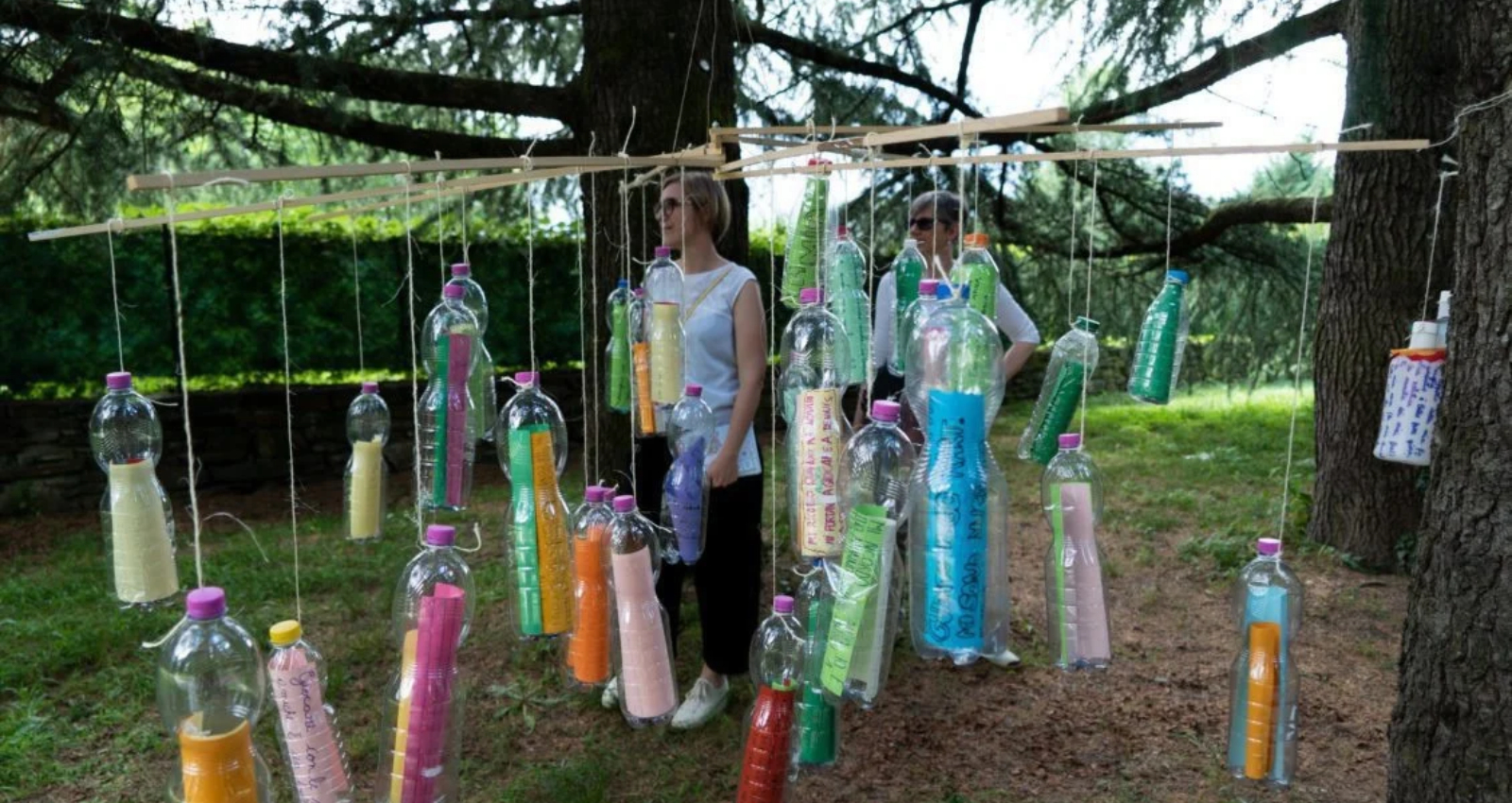
The event involves not only people living with Alzheimer’s and other forms of dementia, but also family members, carers and doctors, artists and ordinary passers-by, with music, theatre, and cinema, as well as physical activity, art, and moments of conviviality.
To get a concrete idea of how the Festival’s organisers describe themselves on their website, let’s read their words: “Alzheimer Fest, like Munich’s Oktoberfest: perhaps with less beer but with more hugs, tasty food, good music, artists, writers, family members, loving carers, doctors without white coats, the healthy and the less healthy, experts without PowerPoint.”
The Festival’s 26 stops this year are spread across various Italian locations. The list is a long one. On 3 September, Alzheimer Fest stopped in Cesenatico; on 5 September in Sassoferrato and Gavirate, and on 6 September in Gavirate and Castel Giorgio. On 12 September it was the turn of San Donà di Piave, followed on 13 September by Padua and Brescia. On 19 September it moved on to Ferrara and Melegnano, and on 20 September to Monza. On 22 September the initiative reached Montopoli. On 26 September it took place in Milan and Pinzolo, and on 27 September in San Fermo della Battaglia and Sassoferrato. In October, the calendar continued on 3 October in Cremona, on 4 October in Carate Brianza, on 9 October in Palermo, on 10 October in Agrigento, on 12 October in Ragusa, on 13 October in Avola, on 15 October in Nicosia, on 16 October in Catania and, finally, on 17 October in Messina.
Over the course of past editions, numerous artists and photographers have contributed to the Festival through donations and works. We’re talking about the work of Maurizio Cattelan and of Ferdinando Scianna, who donated several photographs for the 2018 edition. In the past, an image by the Iranian photographer Shirin Neshat was also offered, later used as the poster for the second edition.