





Conceived by Alberto Conte and coordinated by the Movimento Lento association, the project connects villages, accommodation, and tourism services through walking and cycling routes. Since 2019 it has been developed to reach a wider audience.
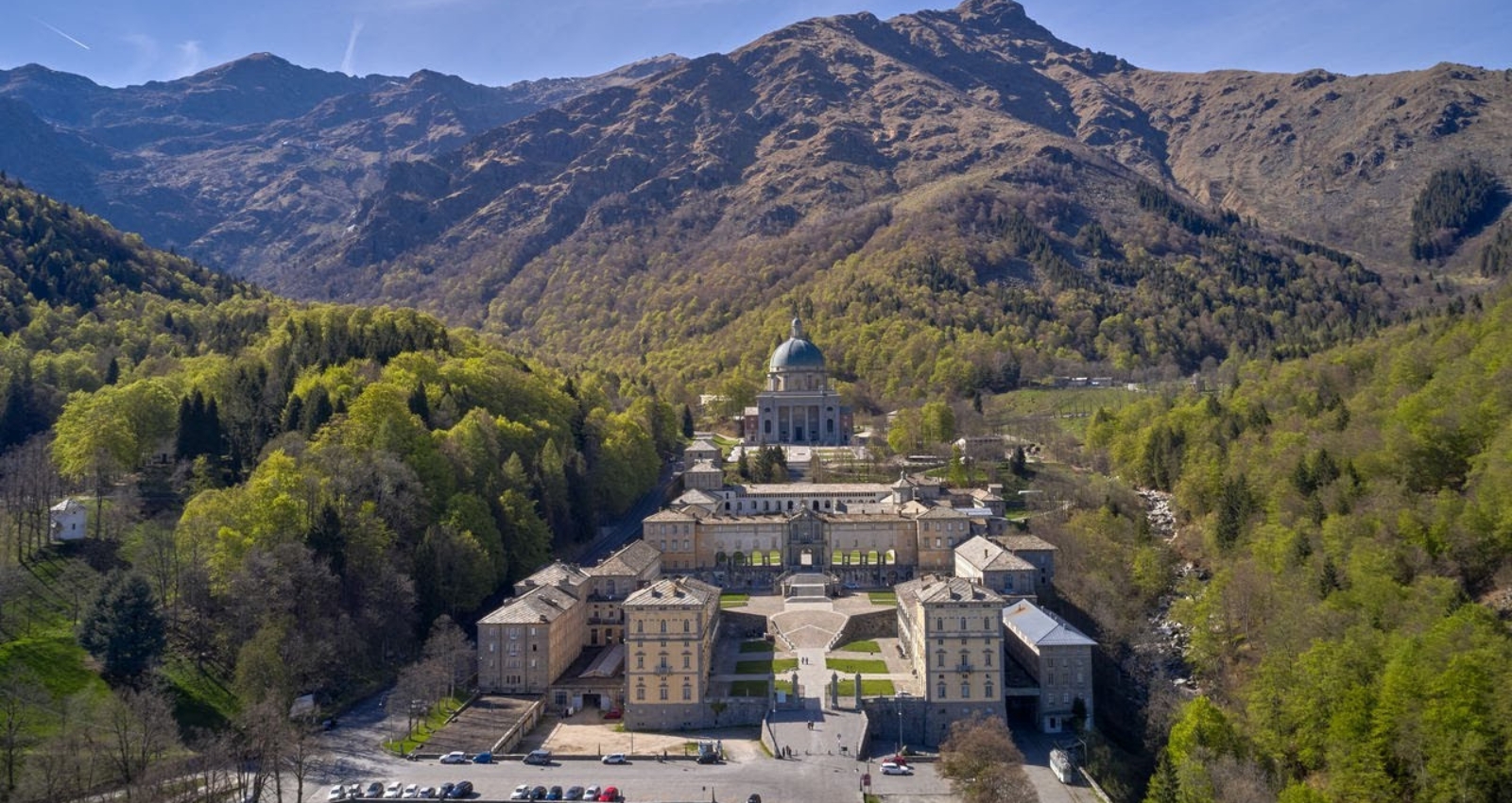
A network of walking and cycling itineraries that crosses northern Piedmont and part of the Aosta Valley, with the Sanctuary of Oropa, in the Biella Alps, as its destination. This is the Oropa Way (Cammino di Oropa), a slow-tourism project launched in 2012 on the initiative of Alberto Conte, founder of the Movimento Lento association, and developed over the following years through collaboration with local associations, accommodation providers, and tourism operators.
The project entered a new phase in 2019, when Movimento Lento created the signage for the four stages of the main itinerary, along with a website, an app, and a dedicated guidebook, launching its promotion to the hiking public.
The original route, which travellers call the Cammino della Serra, connects Santhià to the Sanctuary of Oropa over around 65 kilometres, divided into four stages. It passes through Roppolo, Sala Biellese, and the territory of the Sanctuary of Graglia, before climbing steadily from the plain towards the Biella mountains.
The Way has since expanded with alternative itineraries. There is the Canavese Way, from Valperga to Oropa; the Eastern Way, from Vallemosso to Oropa; and the Aosta Valley Way, which starts from Fontainemore. The network also includes cycle routes, developed to allow Oropa to be reached by bike as well.
The Way operates through a network of affiliated facilities and a booking centre that allows travellers to organise their overnight stays along the stages. Users can easily select their itinerary to obtain quotes from the available properties and then confirm their bookings, paying the operators directly.
A card has also been devised, the SlowCard, which provides a 10 per cent discount at affiliated accommodation, restaurants, and other services. Travellers can also use a pilgrim’s credential, on which to collect the stamps of the stages completed. On arrival they receive the Testimonium, a certificate signed by the rector of the Sanctuary of Oropa. On that note, the credential is not compulsory and can be purchased separately for five euros.
The management and promotion of the project are handled by the social-promotion association Movimento Lento, with technical support from the company ItinerAria. The association looks after the signage, promotion, and booking system, while maintenance is also carried out with the help of the Friends of the Via Francigena and the Trail Angels volunteers. Maps and GPS tracks are available free of charge through the official website and the SlowBi app.
According to data released in March 2026, in 2025 the Oropa Way recorded an estimated 5,773 passages, compared with 5,115 in 2024—growth of close to 13%. These visits generated over 17,000 overnight stays, with an average of 3.06 nights per traveller, and an estimated local spend of more than €1.6 million. The growth mainly concerns the Serra route, while the Canavese route suffers from more limited numbers, owing to the public transport links with Valperga, the itinerary’s starting point.
Meanwhile, the network continues to expand. On 21 September, the Oropa Way of Peace (Cammino di Oropa della Pace) was presented, created in collaboration with the Pacefuturo association. The new itinerary is a loop of around 42 kilometres in three stages, connecting Biella, Pettinengo, and the Sanctuary of Oropa, starting and finishing at the Biella San Paolo railway station.
The Oropa Way today constitutes an organised tourism product, with signposted itineraries, a booking system, and a network of hospitality and services for hikers and cycle tourists. Activities and route information are published on the official Oropa Way website.
Italy Travel Experience Magazine Editorial Team