



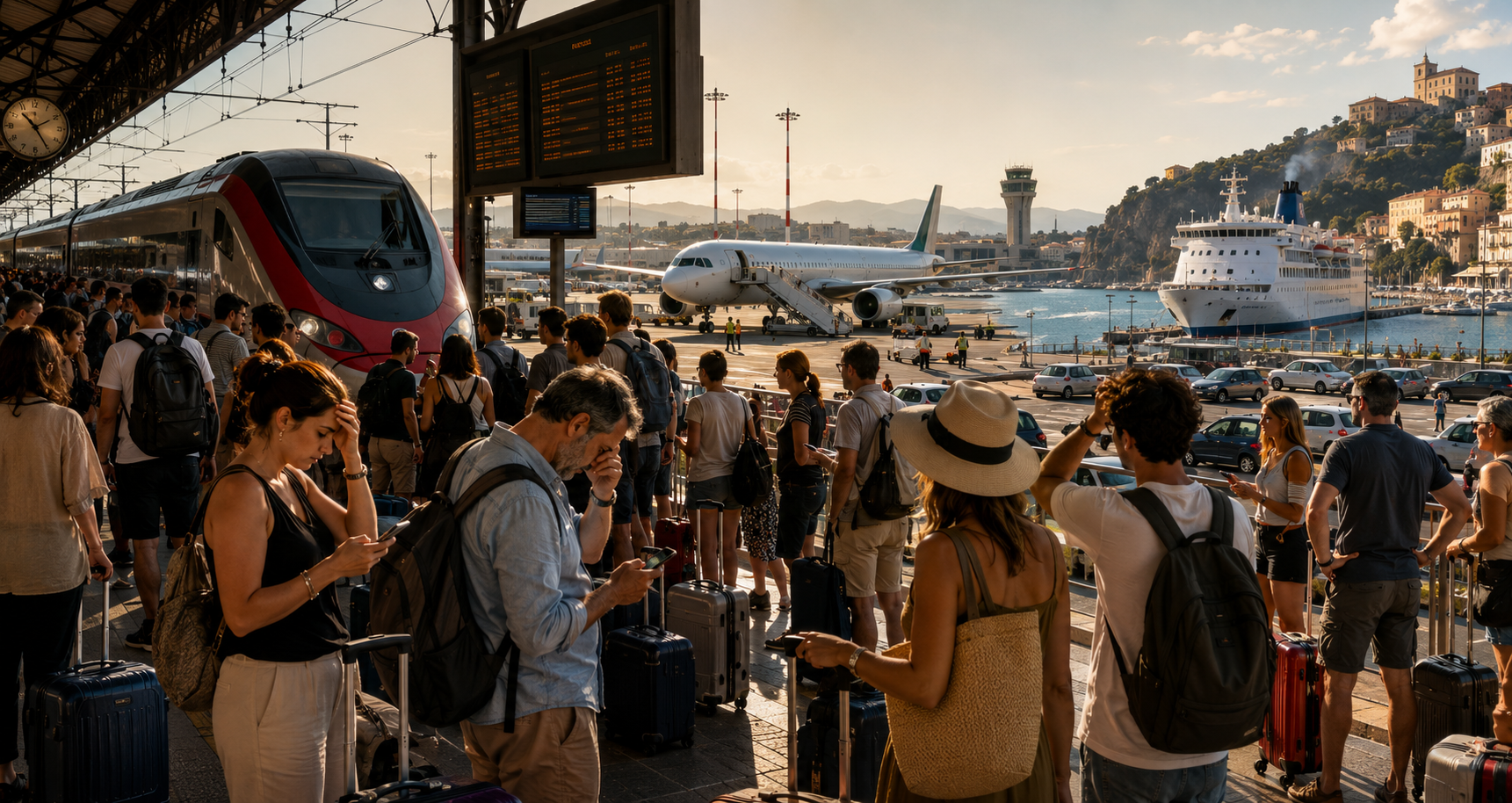
A continuous wave of industrial action has affected Italy throughout 2026, disrupting rail services, aviation, public transport and maritime connections. For those organising travel in Italy, managing strike-related risk has now become a fully fledged operational responsibility.
One issue that Italy’s tourism industry has had to address repeatedly throughout 2026 is transport strikes. These have not been isolated incidents, but a recurring series of industrial disputes affecting local public transport, rail services, aviation and maritime connections, often during the busiest periods of the tourism season.
June was one of the most challenging months for mobility across the country. The period between 9 and 13 June proved particularly difficult because of overlapping rail strikes, industrial action in the aviation sector and protests affecting train operations.
The disruption did not end there. July brought further action involving flights, trains and ferry services. One of the most critical dates was 21 July, when strikes affected the airports of Milan Malpensa, Naples, Salerno and Palermo, as well as services in Sardinia. September then began with an equally crowded schedule of industrial action.
A Cross-Sector Impact
One of the most difficult aspects of this wave of strikes is its fragmented nature. Industrial action does not follow a single format: some strikes last 24 hours, while others are limited to specific time slots; some apply nationwide, whereas others affect only particular regions, airports or transport companies. A strike involving security staff at a single airport, for example, may cause delays and long queues at checkpoints without formally grounding flights. This variety makes travel planning particularly complex for operators responsible for ensuring that their clients can move smoothly between destinations. For tourism professionals, the consequence is clear: strike-risk management has become an integral part of daily operations. Strikes can no longer be treated as occasional unforeseen events. They have become a structural variable that must be monitored and communicated in advance, especially when itineraries depend on tight connections between flights, trains and private transfers.
Legal Safeguards for Travellers
One factor that helps limit disruption is Italy’s system of guaranteed service periods. In local public transport and rail travel, the law requires operators to maintain services during specific protected time slots, even when a strike is taking place. Rail and airline companies are also required to publish details of guaranteed services and provide updates on operational conditions whenever industrial action is announced. The practical advice for travellers—and for those organising their journeys—remains the same: always check the status of flights and trains in advance through the transport operator’s official channels, and consult the updates issued by the Italian Ministry of Infrastructure and Transport before departure. Allowing sufficient time between one connection and the next, and avoiding overly tight schedules on days when strikes are expected, is a precaution that can make a significant difference.
A Question of Reputation
Beyond the immediate inconvenience, transport strikes expose a sensitive issue for Italy’s tourism system: the perception of reliability. An international visitor who becomes stranded because of unexpected industrial action is likely to retain a negative memory of the experience, regardless of the quality of the rest of the trip. For this reason, the ability to anticipate disruption, provide timely information and manage strike-related risk proactively is not merely a logistical matter. It is also an important component of service quality and of protecting Italy’s reputation as a destination. In a competitive market, supporting clients effectively even when unexpected problems arise is part of the value that a professional tourism operator can provide.